Flowchart — Exercises
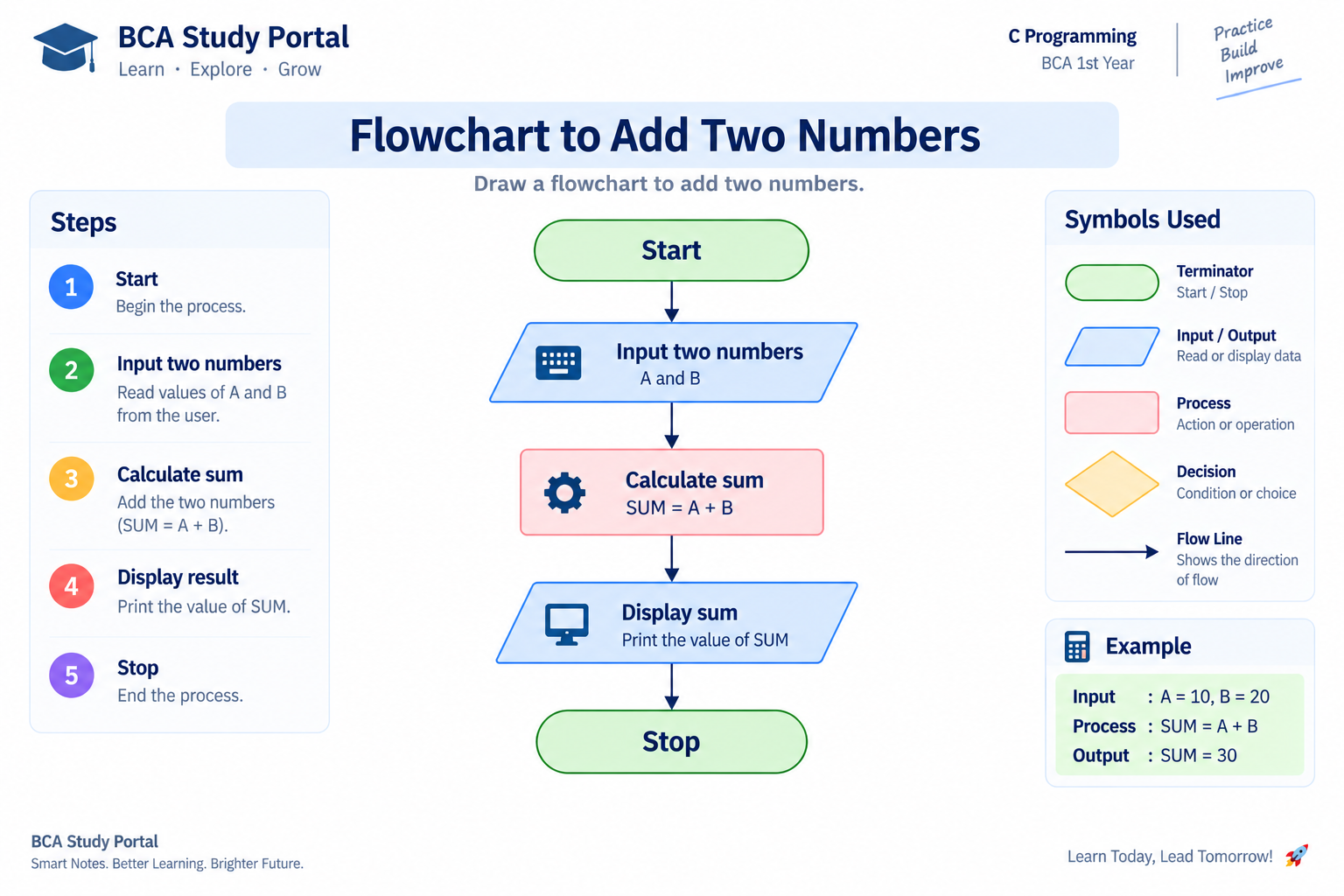
Draw a flowchart to add two numbers.
Practical / Solution
Flowchart — Exercise 1
Problem
Draw a flowchart to add two numbers.
Flowchart
Explanation
The flowchart starts by taking two numbers as input, adds them, displays the sum, and then stops.
Flowchart — Exercise 2
Problem
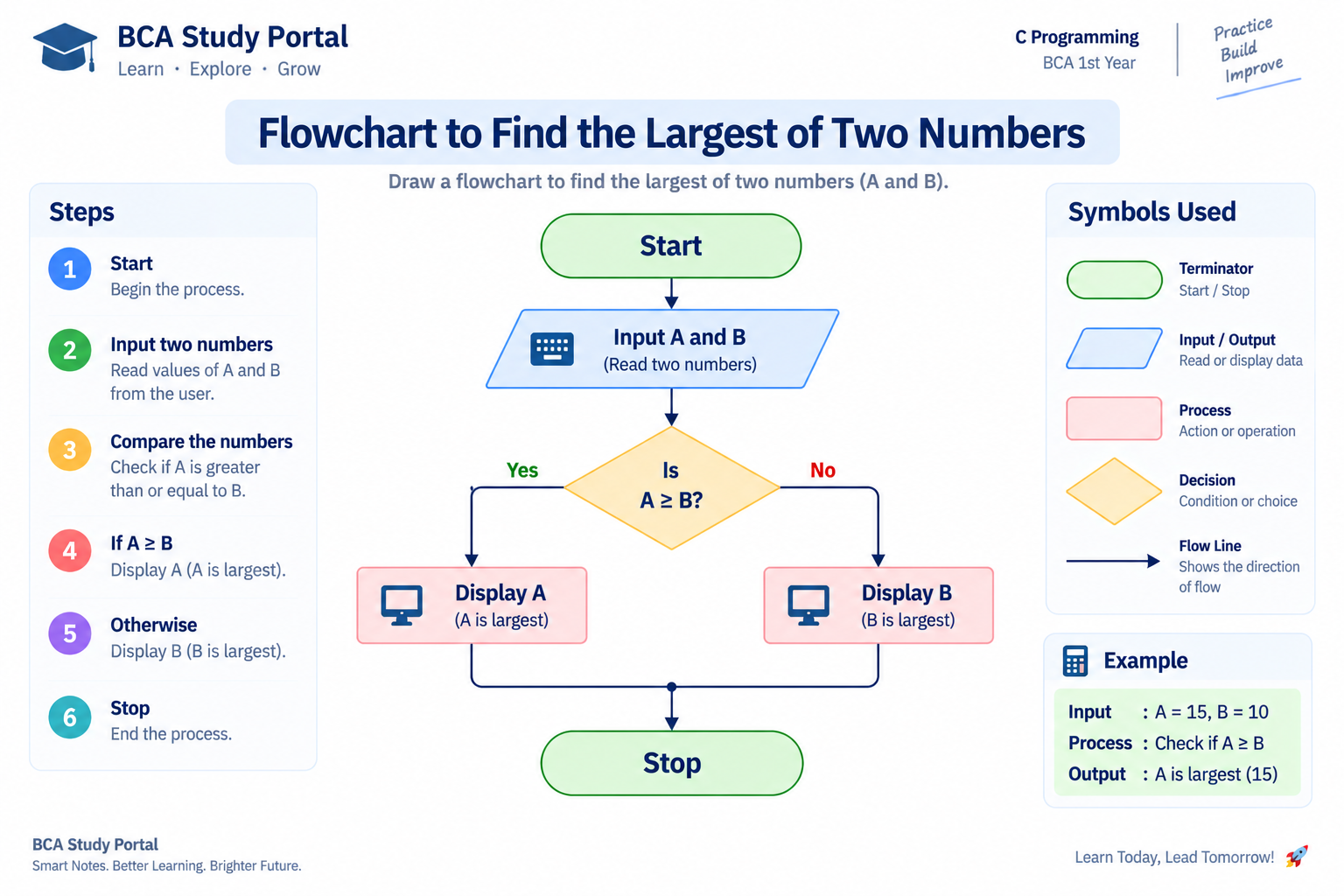
Draw a flowchart to find the largest of two numbers.
Flowchart
Explanation
The flowchart accepts two numbers, compares them, and displays the greater number.
Flowchart — Exercise 3
Problem
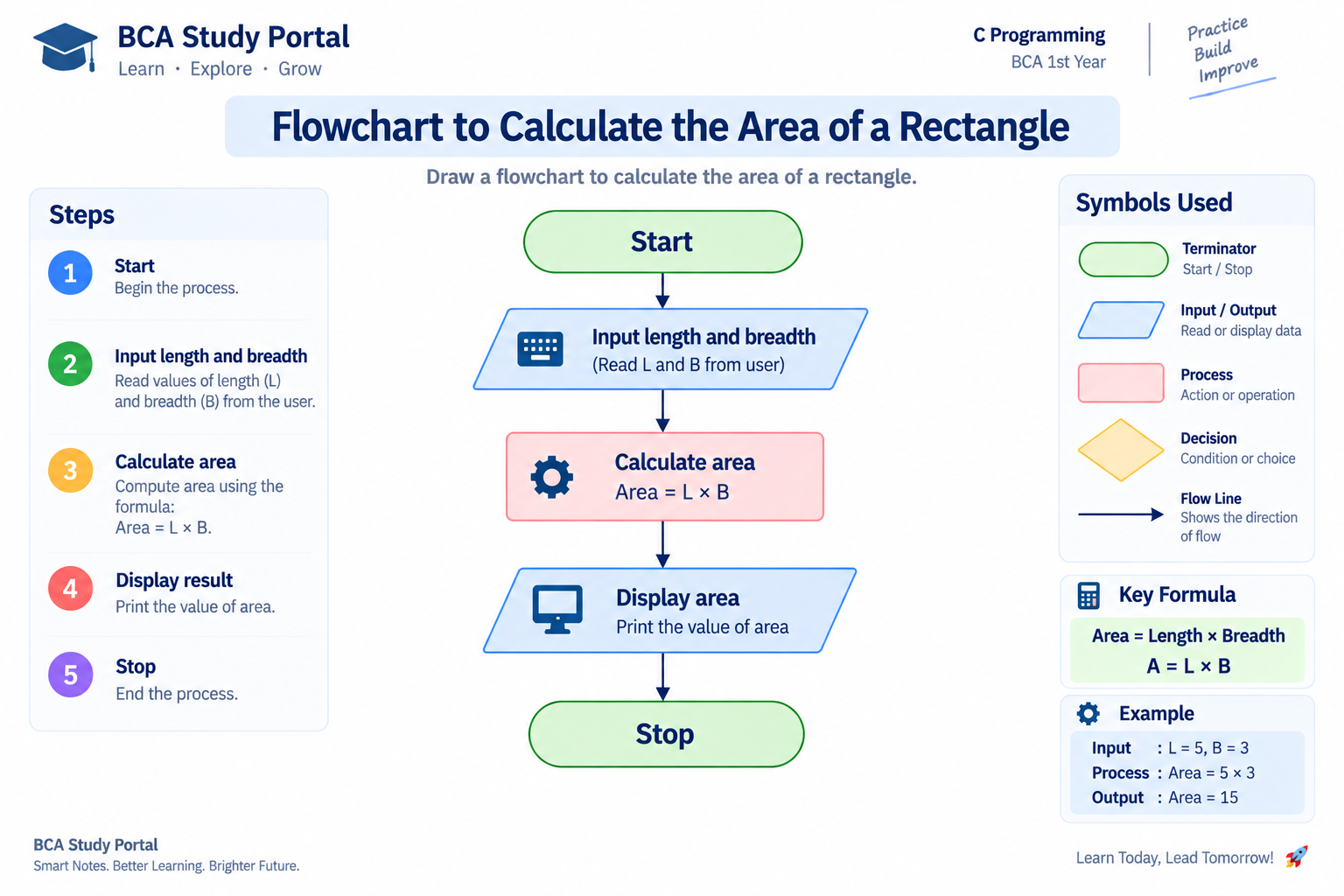
Draw a flowchart to calculate the area of a rectangle.
Flowchart
Explanation
The flowchart takes the length and width as input, calculates the area using length × width, displays the result, and stops.
Flowchart — Exercise 4
Problem
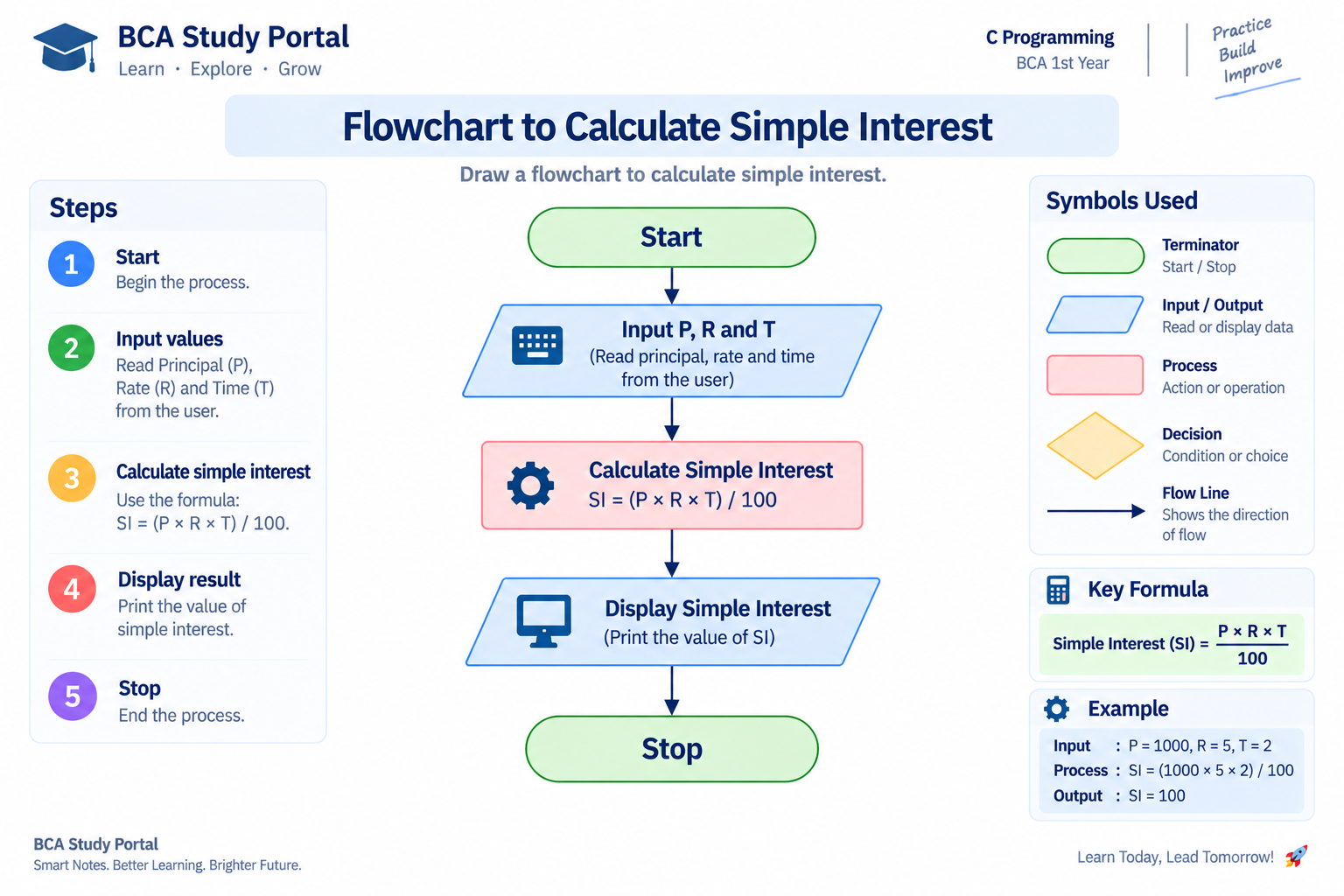
Draw a flowchart to calculate simple interest.
Flowchart
Explanation
The flowchart accepts the principal amount, rate and time, applies the simple interest formula, displays the result, and stops.
Flowchart — Exercise 5
Problem
Draw a flowchart to check whether a number is even or odd.
Flowchart
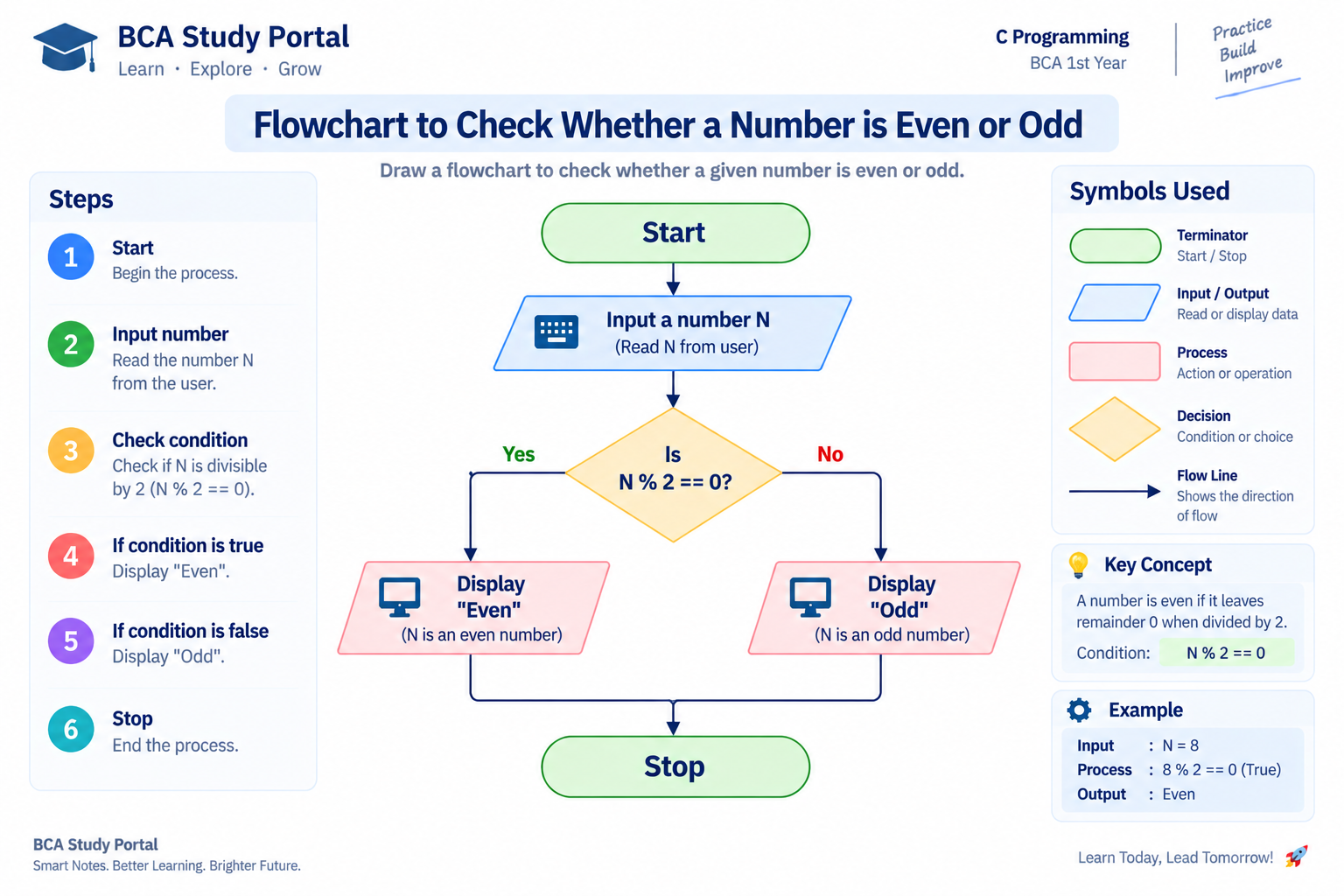
Explanation
The flowchart divides the number by 2 and checks the remainder. A remainder of 0 indicates an even number; otherwise the number is odd.
Flowchart — Exercise 6
Problem
Draw a flowchart to check whether a number is positive, negative, or zero.
Flowchart
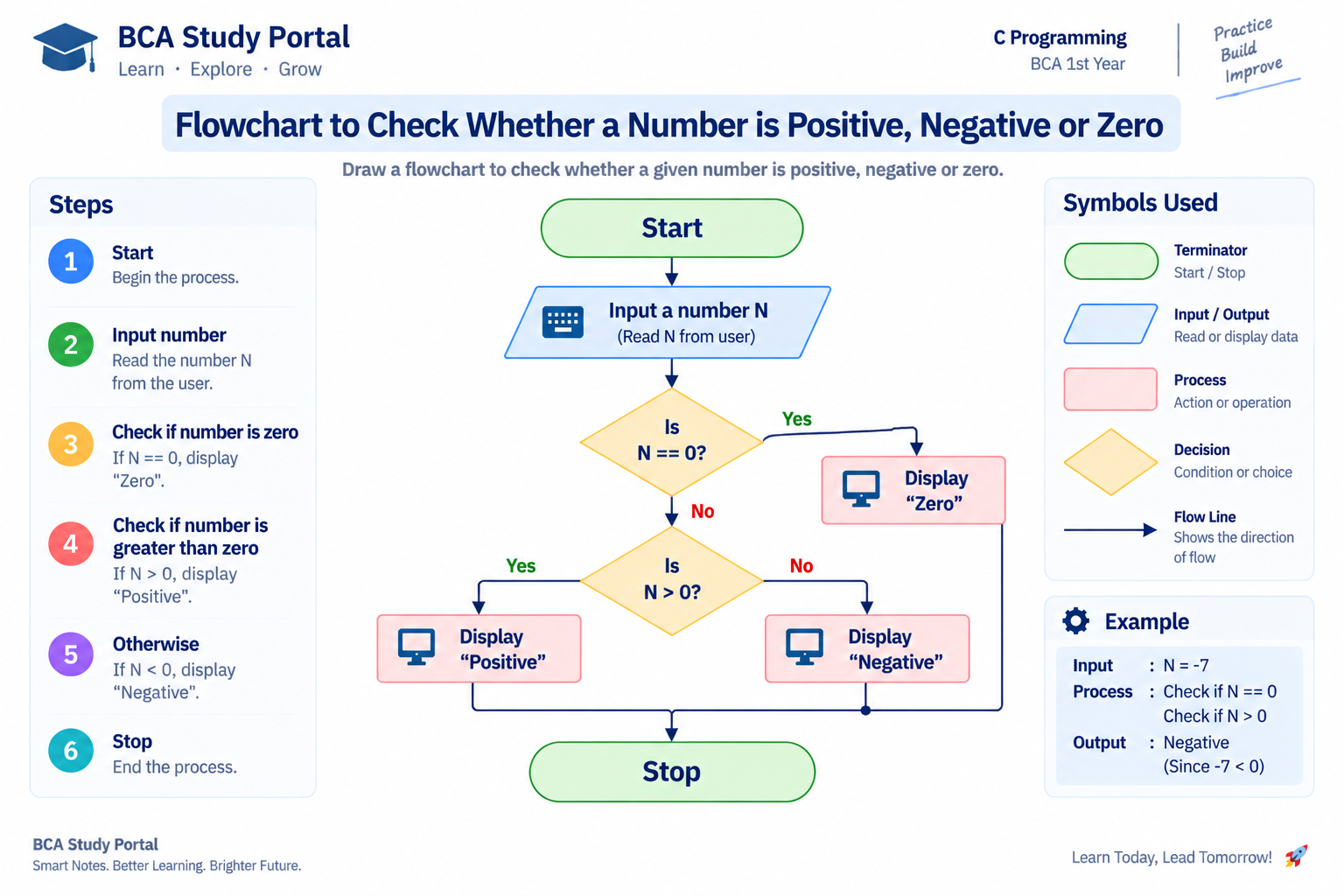
Explanation
The flowchart compares the input number with zero and determines whether it is positive, negative, or zero.
Flowchart — Exercise 7
Problem
Draw a flowchart to find the largest of three numbers.
Flowchart
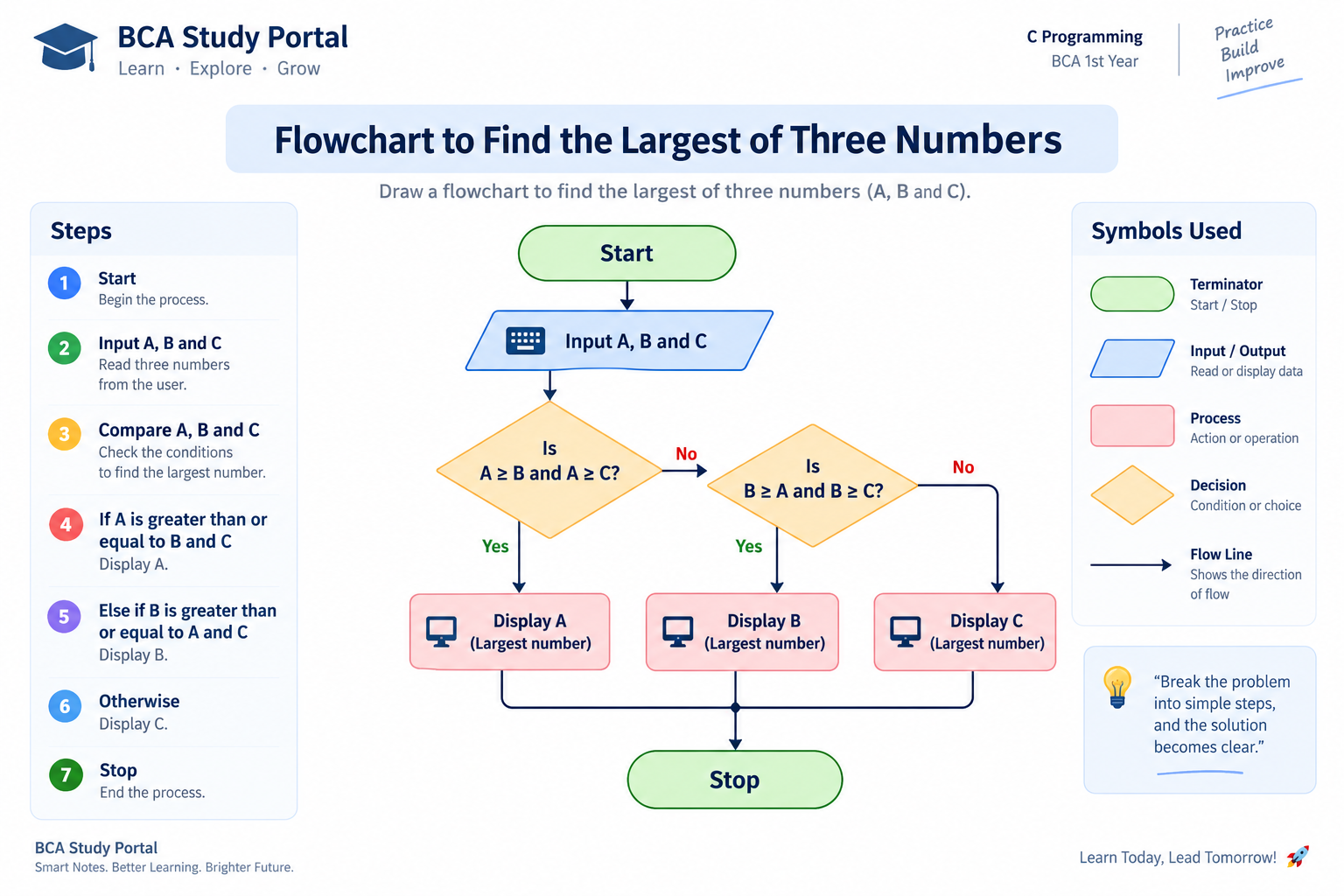
Explanation
The flowchart compares the three input values and determines which one is the largest.
Flowchart — Exercise 8
Problem
Draw a flowchart to calculate the factorial of a number.
Flowchart
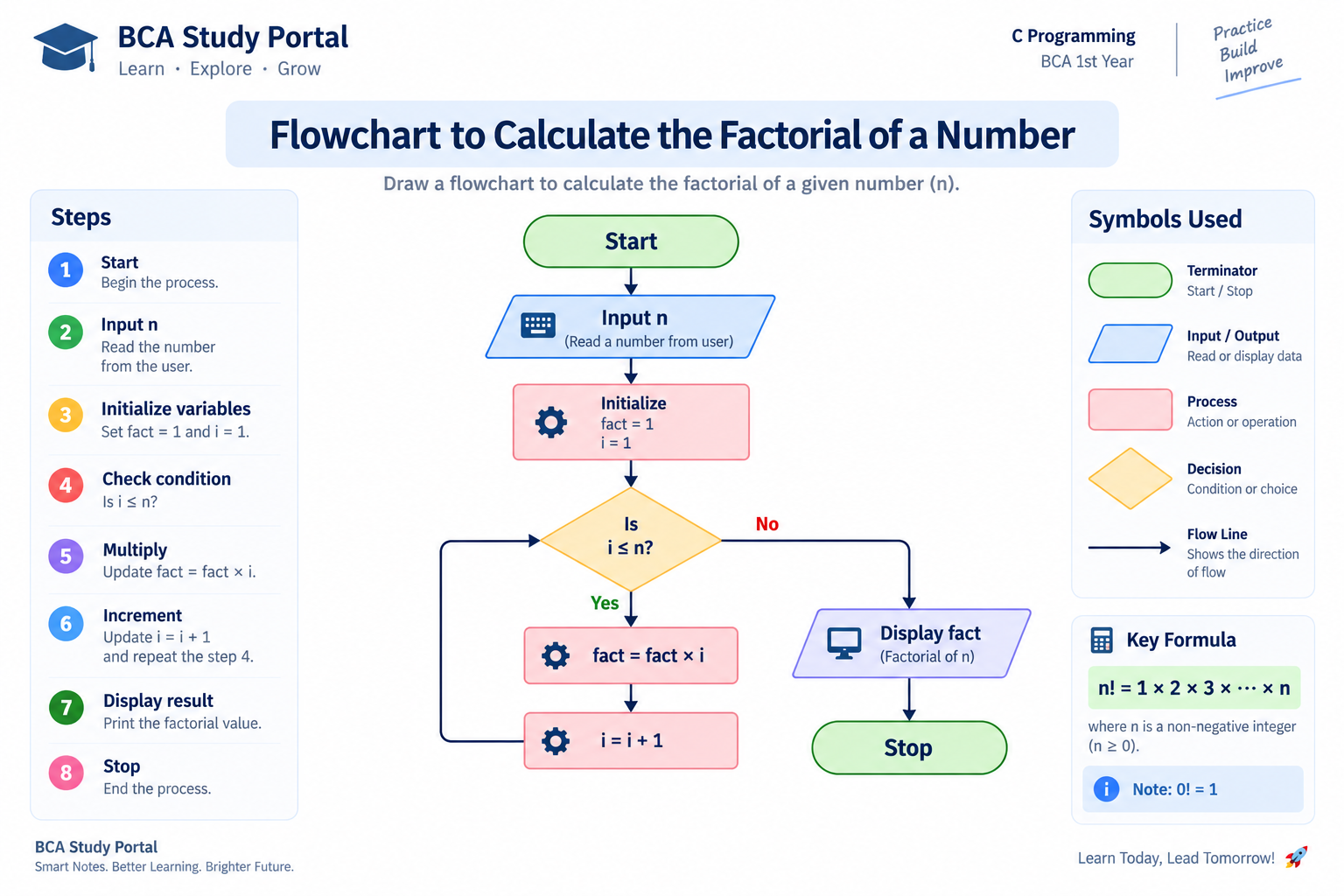
Explanation
The flowchart initializes the factorial value, repeatedly multiplies it by the numbers from 1 to N, and displays the result.
Flowchart — Exercise 9
Problem
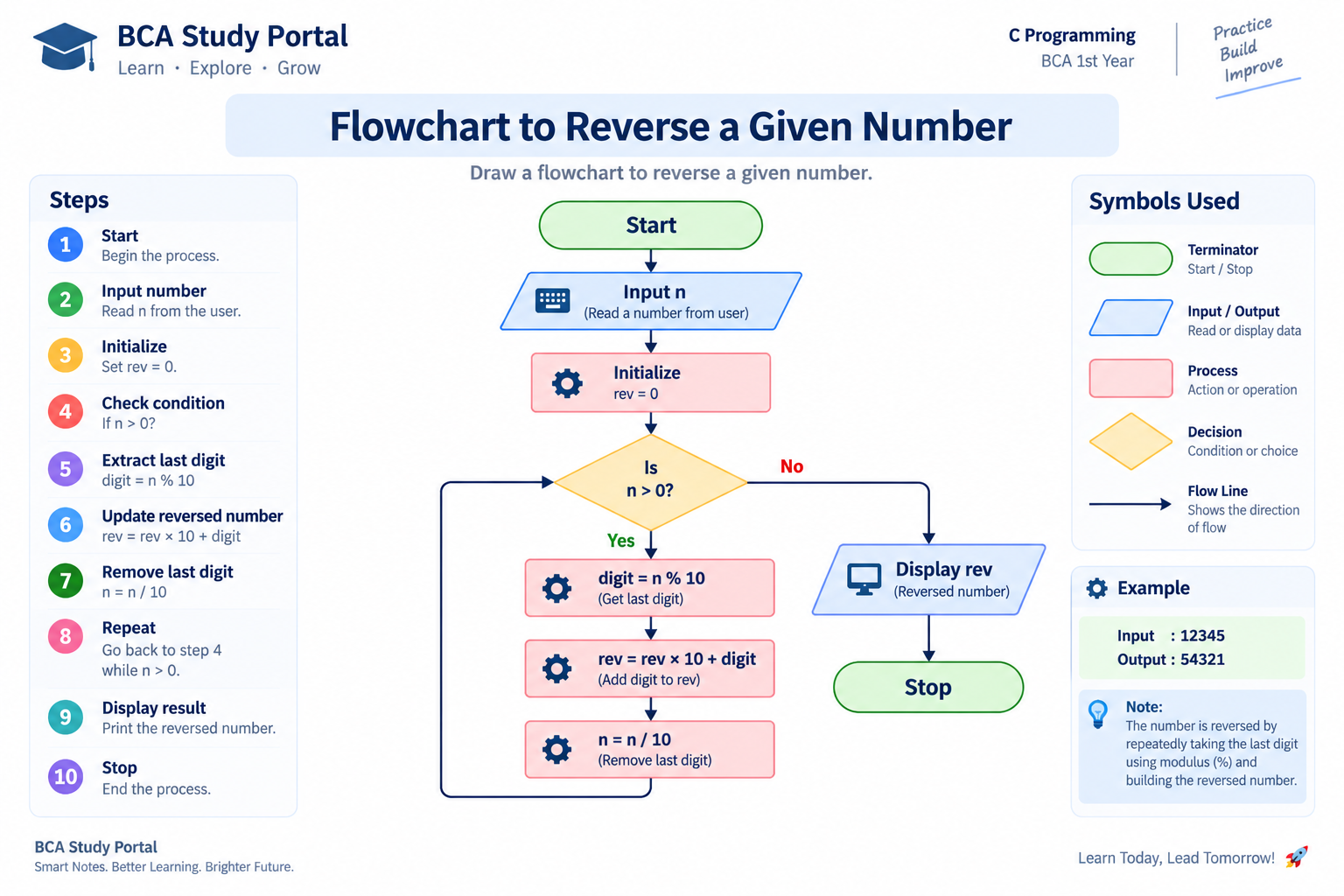
Draw a flowchart to reverse a given number.
Flowchart
Explanation
The flowchart repeatedly extracts the last digit of the number and constructs the reversed number until the original number becomes zero.
Flowchart — Exercise 10
Problem
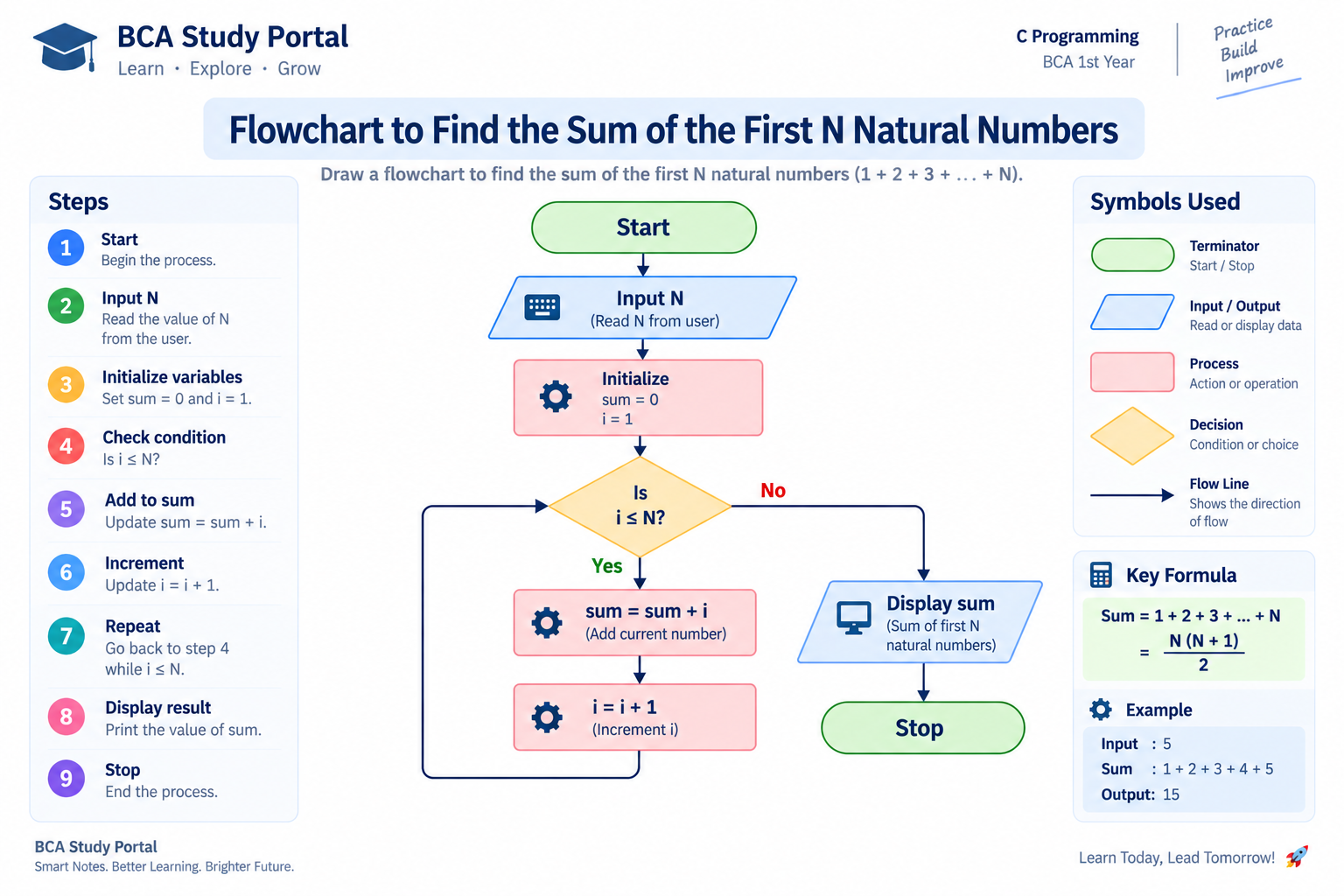
Draw a flowchart to find the sum of the first N natural numbers.
Flowchart
Explanation
The flowchart starts with SUM = 0 and repeatedly adds the natural numbers from 1 to N. The final sum is then displayed.